
 The location and position of the weekend resort enables it to be a part of sport tourism with a great opportunity for recreation. Being near many historical locations, monasteries (Tronoša, Soko Grad, etc.) national monuments to the fallen soldiers on mountain Gučevo and in Tekeriš, spa resorts (Banja Koviljača, Radaljska Banja, Banja Badanja) and the well-known clear waters of the world famous river Drina is another reason to visit this magnificent place. Next to all these locations, “Drinska Regata” (a traditional gathering during which visitors go rafting on the Drina), which takes place every second Saturday each July, would complete your vacation.
The excursions which can be organized for the visitors with or without a guide include visiting: monastery Tronoša (built in 13th century, about 70km away), Soko Grad (25km), spa resort Banja Koviljača (40km), mountain Gučevo and village Tršić, the birthplace of Vuk Karadžić (50km).
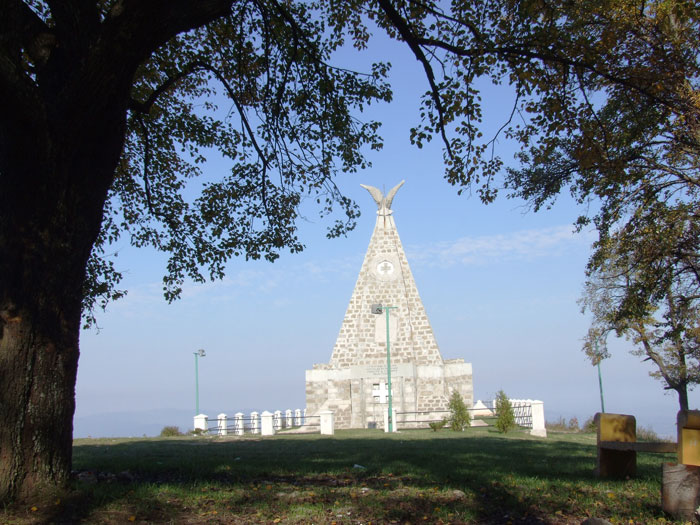
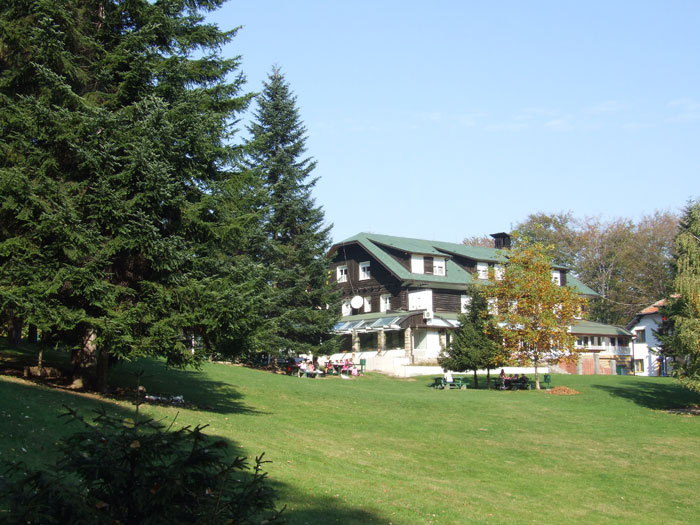 Mountain Gučevo is the westest part of mountains in podrinjsko-valjevski region. With its length of 15km, it lies in the valley of the river Drina in southeast position. The mountain’s highest peak is Crni Vrh (799m). Gučevo is also known for the fact that the first trench warfare in the world was implemented here in 1914 during war operations in World War I. In honor of the fallen soldiers, a 15m high, pyramid shaped monument was built at the top of the mountain. On the mountain, at the altitude of 779m, 8km from Banja Koviljača and 14km from Loznica, there is also a tourist resort “Odmaralište Gučevo”.
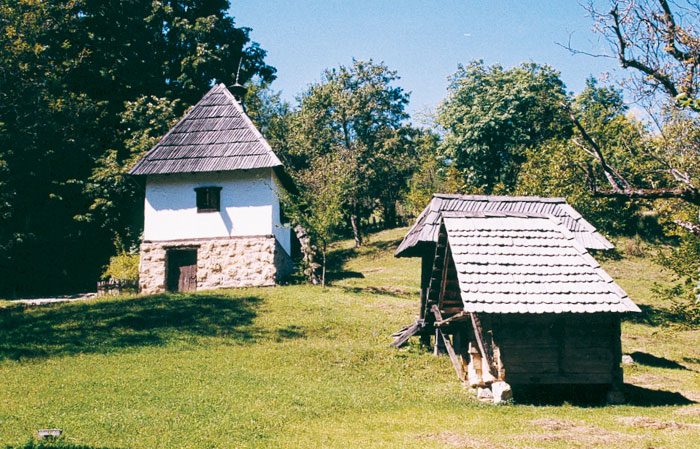 Tršić – birthplace of Vuk Karadžić (50km away)
The village Tršić is about 9km southeast from Loznica and it is the birthplace of Vuk Stefanović Karadžić, major reformer of the Serbian language and the author of contemporary Serbian Cyrillic. In the village there is an ethnographic park with a memorial house, different representations of national architecture and places for visitors. In 1933, at the place where once was the Karadzic family home, a memorial house was built – two-piece log cabin, partly above the basement with a steep, shake roof. One part is “the house” (a place for living) and a room, and the other is a warehouse, a log cabin for making rakia (kačara) and a corn-store.
The house is a part with an open fireplace, furniture and dishes, everything characteristic for the 19th century household. In the room there is a bed, a table, a bench, icons, gusle and Pavel Đurković’s portrait of Vuk Karadžić dating from 1816.
Recommended Tourist Excursions:
- Monastery Soko Grad (with hiking to the monument) ………………… approximately 2-3hrs
- Gučevo and Banja Koviljača ……………………………………………………………………. approximately 4-6hrs
- Tršiš and Tronoša ……………………………………………………………………………………… approximately 4-6hrs
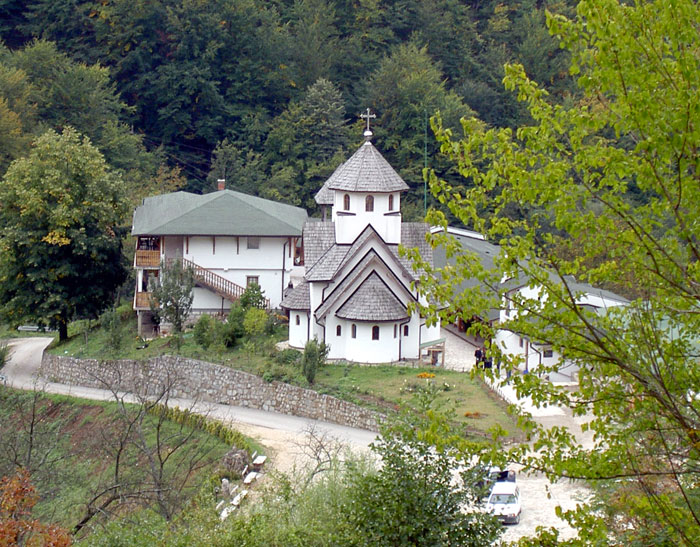 Before the construction of “Sveti otac Nikolaj” monastery, in entire Azbukovica there was no monastery which survived ottoman occupation. One who felt the need to visit a monastery had to go to Rača, near Bajina Bašta, or Tronoša near Loznica, both 50 km of uncomfortable journey.
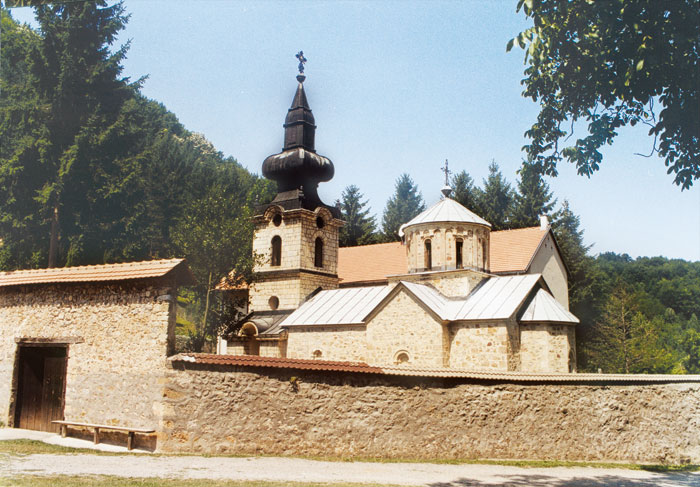
Tronoša is about 17 km from Loznica. The monastery chapel is dedicated to the Nativity of the Most-holy Theotokos. According to the legend, the construction of the monastery was started under supervision of king Dragutin but due to his death, it was finished with the help of his wife Catherine in 1317.
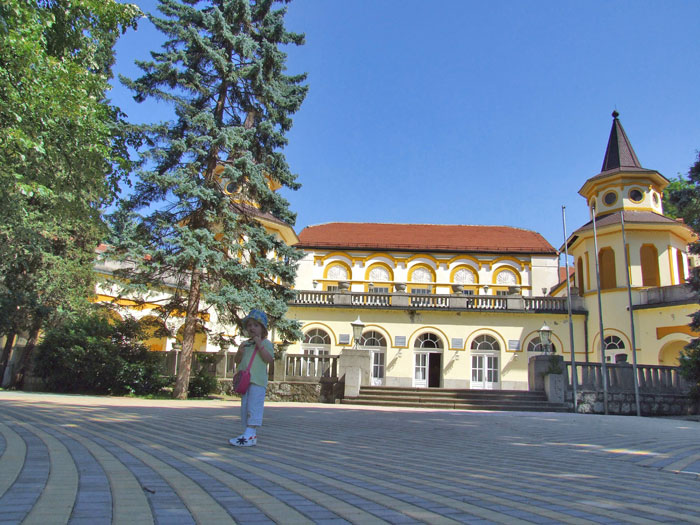 Banja Koviljača is one of the most beautiful and most healing spas in the entire Balkans. A gorgeous park with old edifices from the beginning of the 20th century, favorable climate and slops of mountain Gučevo with its dense forest are making Banja Koviljača a great place for tourists. Aside from these conveniences, Banja Koviljača is also great place for treatment of many diseases because of the sulphurous thermomineral water, healthful mud and pure air.
Some of the diseases that can be treated in this spa are: rheumatic diseases, degenerative diseases of joints and spinal column, discus hernia as well as discus hernia post-operative conditions, osteoporosis, post-traumatic conditions of the upper and lower limbs and spinal column, slight diseases of the central nervous system, lesions of the peripheral nervous system, muscle diseases, etc.